Ethiopia / Diaspora communities / Djibouti / Eritrea
The Afar are a Cushitic-speaking people of the Horn of Africa, known for Afar language, pastoral traditions, desert and Red Sea heritage, clan identity, Islamic faith, poetry, oral history, distinctive dress, marriage customs and strong community values.
Salaam
Hello · Afar / Islamic regional usage
Gadda gey
Thank you · Afar
The Afar are a Cushitic-speaking people of the Horn of Africa, mainly associated with Ethiopia, Djibouti and Eritrea. Afar identity is connected to language, clan history, pastoral life, camels and livestock, desert and coastal environments, Islam, oral poetry, family honour, marriage customs and respect for elders.
Afar communities are diverse across country borders and ecological zones. Public content should describe broad cultural patterns while recognising clan, regional and family variation.
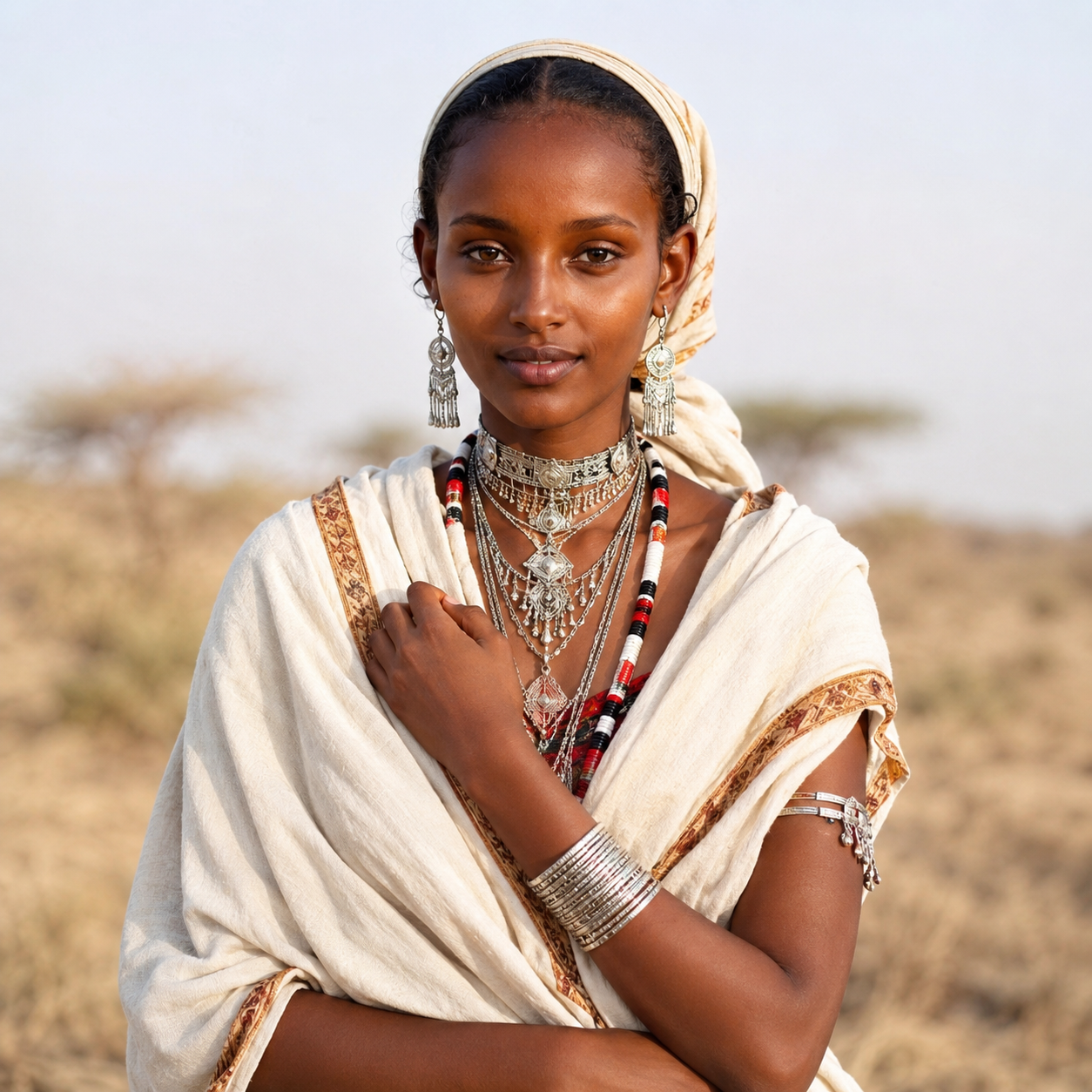
Afar dress often includes wrapped cotton cloth, shawls, head coverings, sandals, jewellery and practical garments suited to hot desert and coastal conditions. Men may wear a wrapped garment and carry a traditional knife in cultural contexts, while women may wear long dresses, shawls and jewellery.
Afar marriage customs commonly involve family negotiation, bridewealth or agreed gifts, livestock, blessings and Islamic marriage requirements. Details vary by clan, country, family and religious practice, so no single list should be treated as universal.
Afar performance traditions include poetry, chanting, clapping, group movement, wedding songs and community celebration performances. Oral poetry is especially important in preserving memory, praise and social values.
Common Afar foods include milk, camel milk, goat meat, flatbread, porridge, rice, dates, tea, coffee, fish in coastal areas and foods adapted to pastoral and desert life.
Afar crafts include leatherwork, woven mats, baskets, knives, jewellery, camel gear, household items and practical objects suited to pastoral mobility.
Afar origins are preserved through clan genealogies, oral tradition and regional histories across the Horn of Africa. Their identity is shaped by long settlement in desert, coastal and pastoral environments.
Afar history includes pastoral mobility, camel and livestock culture, clan organisation, Islamic influence, Red Sea trade, cross-border life, colonial boundaries, modern state formation and diaspora communities.
Modern Afar dating and marriage expectations vary by family, country and religious practice. Serious relationships are commonly expected to involve family knowledge, elders and Islamic marriage procedures.
Afar marriage is family-centred and commonly includes family negotiation, agreed bridewealth or gifts, religious recognition, blessings and community acknowledgement.
Most Afar people are Muslim, and Islamic faith strongly shapes marriage, family life, ethics and community practice. Older customary traditions may also influence clan and family protocols.
Leadership may include clan elders, sultans or traditional authorities in some areas, religious leaders and family heads.
Sensitive areas include disrespecting Islam, clan honour, elders, private marriage negotiations and stereotyping Afar people only as desert nomads.