Mali / Burkina Faso / Côte d’Ivoire / Diaspora communities / Guinea / Senegal
The Bambara, also known as Bamana, are a major Mande-speaking people of Mali, known for Bamanankan language, farming traditions, oral history, music, masks, textile arts, family values, marriage customs, griot heritage, Islam and deep influence in Malian culture.
I ni ce
Hello · Bamanankan
I ni sogoma
Good morning · Bamanankan
I ni ce / Abarika
Thank you · Bamanankan
The Bambara, also called Bamana, are a major Mande-speaking people of Mali and neighbouring West African regions. Bambara identity is connected to Bamanankan language, farming, family lineage, clan history, oral tradition, music, masks, textiles, marriage customs, Islam, older spiritual traditions in some contexts, elders and community responsibility.
Bambara culture varies by region, family, religion and generation. Public content should describe broad cultural patterns while recognising local variation.
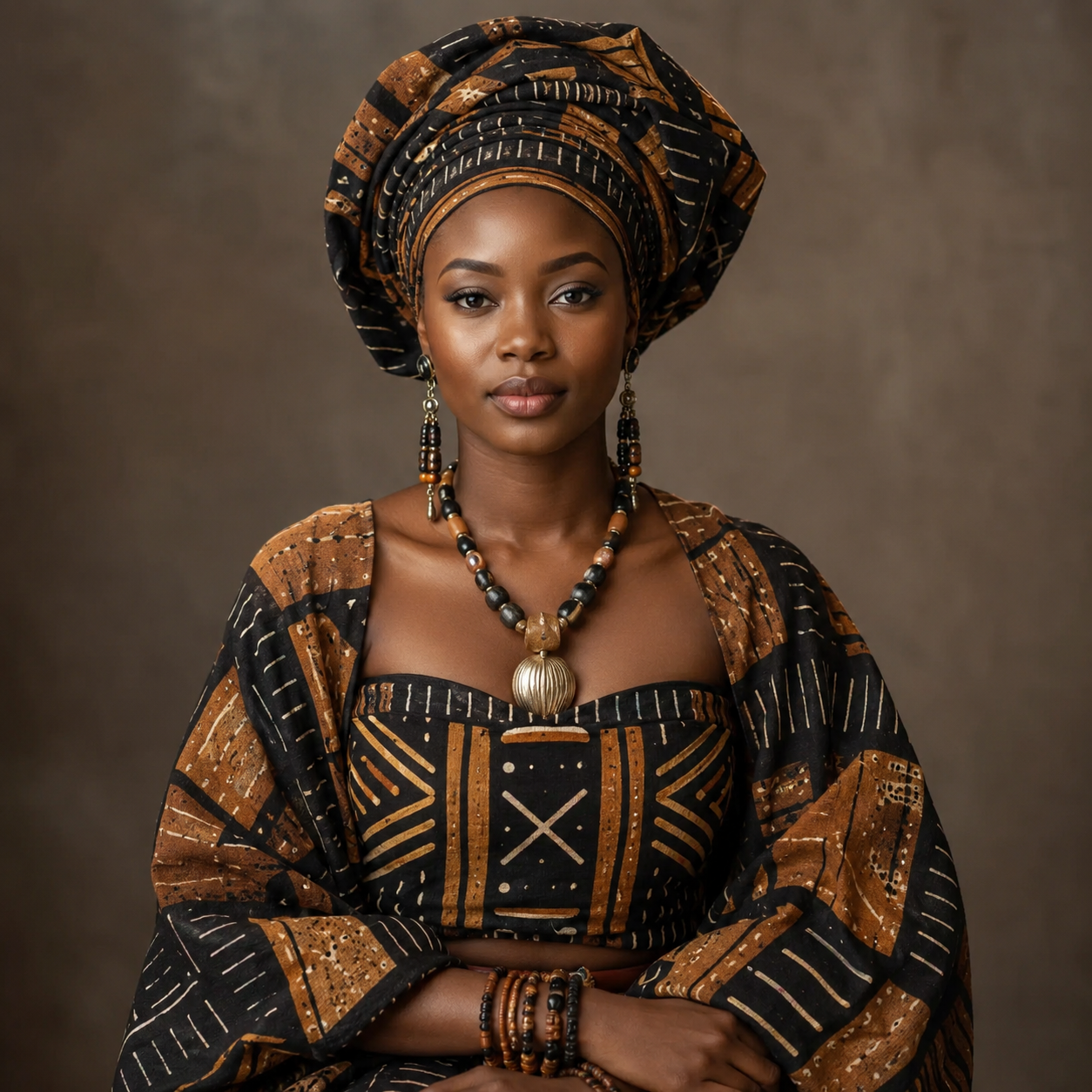
Bambara ceremonial dress may include boubou robes, embroidered garments, wrappers, headwraps, caps, mudcloth-inspired textiles, beads and formal garments for weddings, naming ceremonies, festivals and family events. Everyday and ceremonial clothing varies by urban or rural setting and religious practice.
Bambara marriage customs commonly include family introduction, bridewealth or agreed gifts, clothing, food, kola nuts in some communities, religious or customary blessings and public celebration. Details vary by family, region and religion, so no single list should be treated as universal.
Bambara performance traditions include drumming, griot praise singing, masked performances in some communities, festival dances, wedding music, call-and-response singing and community celebration dances.
Common Bambara foods include millet, sorghum, rice, tô, fonio, groundnut sauces, okra, fish, chicken, goat meat, vegetables, beans and tea.
Bambara crafts include bogolan/mudcloth, wood carving, masks, pottery, weaving, leatherwork, metalwork, drums, basketry and ceremonial objects.
Bambara origins are preserved through Mande oral traditions, clan histories and settlement memories in Mali. Bambara identity developed within the wider Mande cultural world, with families preserving distinct lineages and local histories.
Bambara history includes Mande-speaking settlement, farming, trade, kingdoms and political formations in Mali, oral history, craft production, Islam, colonial rule, independence-era national life, migration and modern Malian culture.
Modern Bambara dating varies by family, religion and location. Serious relationships often move toward family awareness, elder involvement, modest conduct and marriage discussions.
Bambara marriage is family-centred and may include introductions, bridewealth or gifts, religious recognition, blessings, food, clothing and celebration. Details vary by region and family.
Many Bambara people are Muslim, while some families preserve older Mande cultural beliefs, ancestral respect, ritual associations or symbolic traditions alongside Islam. Beliefs vary by family and region.
Leadership may include elders, clan heads, family heads, religious leaders, chiefs, griots, craft specialists and local community authorities.
Sensitive areas include disrespecting elders, misrepresenting sacred masks or ritual associations, exposing private marriage matters, simplifying all Mande groups as identical and treating cultural objects as decoration only.