Nigeria / Diaspora communities
The Edo are a southern Nigerian people centred around Benin City, known for the Edo language, Benin Kingdom heritage, royal traditions, bronze and ivory arts, coral bead regalia, family values, marriage customs, festivals and deep respect for elders and ancestors.
Kóyo
Hello · Edo
Obulu
Thank you · Edo
Vbè ye
Welcome · Edo
The Edo are a southern Nigerian people mainly associated with Edo State and Benin City. Edo identity is strongly connected to the historic Benin Kingdom, royal institutions, language, family lineage, coral bead regalia, bronze and ivory arts, festivals, marriage customs and respect for elders.
Edo culture varies by family, town, religion and generation. Public content should recognise the importance of Benin history while avoiding the assumption that every Edo person follows identical customs.
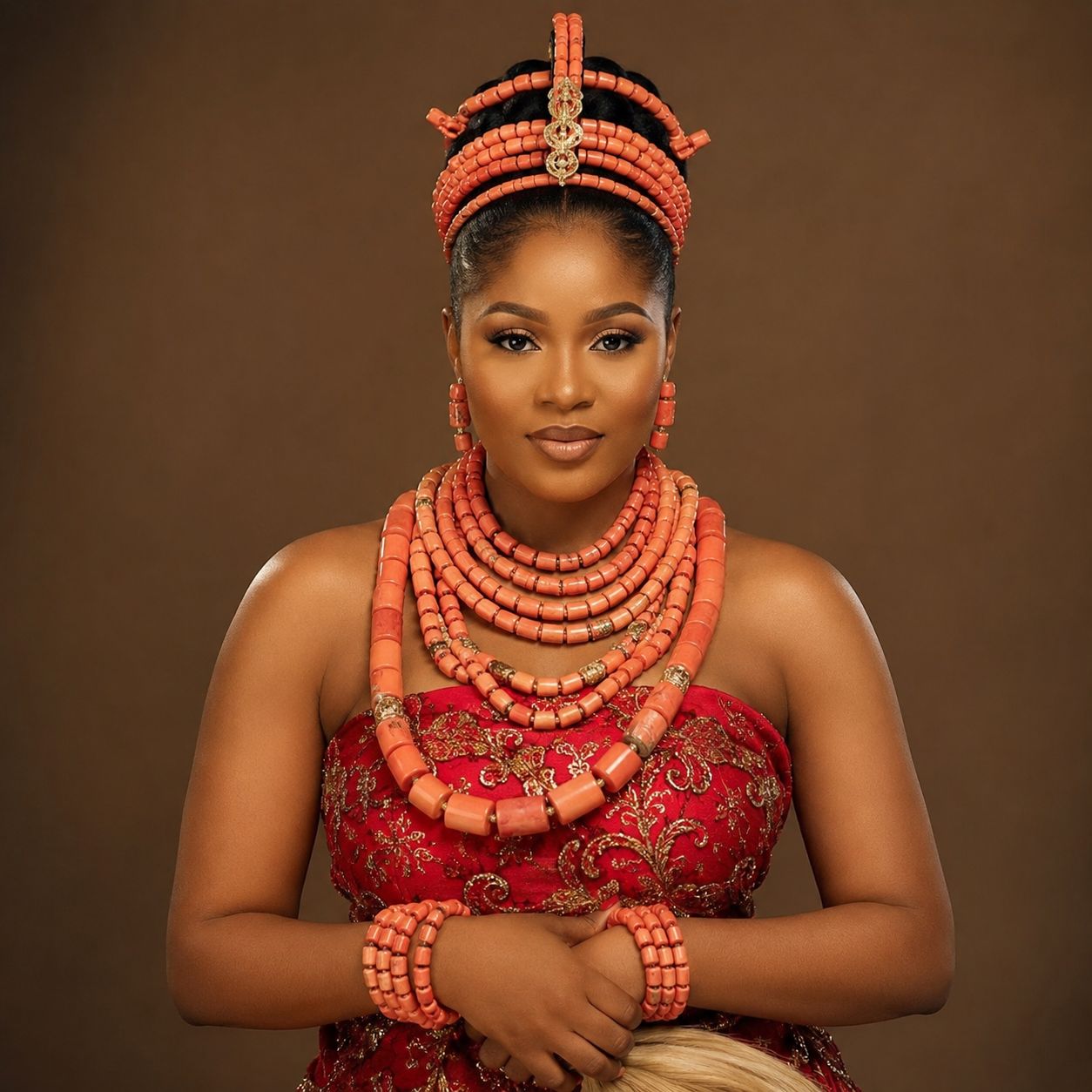
Edo ceremonial dress is known for coral beads, wrappers, velvet or richly decorated garments, head ties, crowns and royal-inspired accessories. Brides are often associated with coral bead regalia and elegant wrappers, while men may wear wrappers, shirts, beads, caps and formal ceremonial attire.
Edo marriage negotiations commonly involve family introduction, bridewealth discussions, gifts, drinks, food, clothing or agreed items and blessings from both families. Requirements vary by family and locality, so no single list should be treated as universal.
Edo dances and performances include festival dances, royal ceremonial music, drumming, praise singing, masquerade-related performances and community celebrations.
Common Edo foods include pounded yam, starch, banga soup, black soup, egusi soup, okra soup, rice, plantain, fish, goat meat, chicken and palm wine in ceremonial contexts.
Edo crafts are internationally known through Benin bronze, brass, ivory and wood carving traditions, as well as beadwork, textiles, pottery and ceremonial objects.
Edo origins are closely tied to the history of Benin City and the Benin Kingdom. Oral traditions, royal chronicles and community histories preserve stories of dynasties, palace institutions, guilds and ancestral memory.
Edo history includes the rise of the Benin Kingdom, royal administration, palace guilds, bronze and ivory art, regional trade, colonial conquest, Christianity, urbanisation and modern Edo identity in Nigeria and the diaspora.
Modern Edo dating varies by family and religion. Serious relationships often move toward family awareness, formal introduction and marriage discussions.
Edo marriage is family-centred and commonly includes introduction, bridewealth, gifts, blessings and customary, church or civil ceremonies depending on the couple and families.
Traditional Edo belief includes respect for the Supreme Being, ancestors, royal sacred traditions and community moral order. Many Edo people today are Christian while preserving selected cultural customs.
Traditional leadership is strongly associated with the Oba of Benin, chiefs, elders, palace institutions and family heads.
Sensitive areas include misrepresenting royal traditions, exposing private marriage negotiations, disrespecting elders and reducing Edo culture only to bronze art.