Gabon / Cameroon / Diaspora communities / Equatorial Guinea / Republic of the Congo
The Fang are a major Central African people found in Gabon, Equatorial Guinea and Cameroon, known for Fang language varieties, clan identity, wood sculpture, byeri reliquary traditions, farming, music, dance, marriage customs, family values and strong cultural heritage.
Mbolo / regional usage
Hello · Fang
Akiba / regional forms vary
Thank you · Fang / regional usage
The Fang are a major Central African people mainly associated with Gabon, Equatorial Guinea and southern Cameroon. Fang identity is connected to language varieties, clan lineage, family, farming, forest heritage, marriage customs, wood sculpture, music, dance, elders, Christianity and older spiritual traditions in some contexts.
Fang communities are diverse across countries, clans, religions and urban or rural settings. Public content should describe broad cultural patterns while recognising local variation.
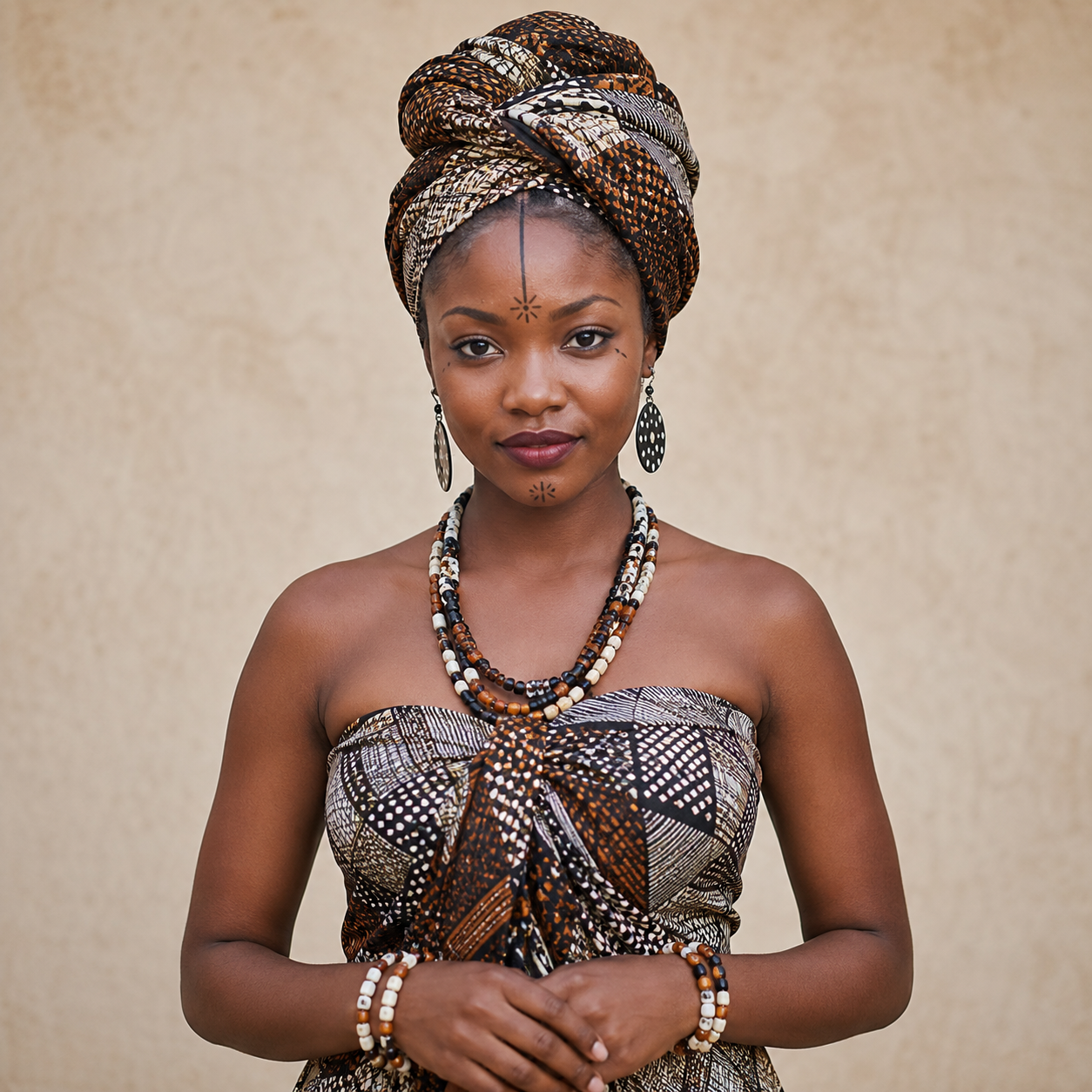
Fang ceremonial dress may include wrapped cloth, patterned fabrics, beads, headwear, raffia-inspired accessories, formal garments and elegant outfits for weddings, church events, funerals and cultural ceremonies. Dress varies by country, religion and occasion.
Fang marriage customs commonly include family introduction, bridewealth or agreed gifts, food, drinks, clothing, blessings and community recognition. Details vary by country, clan, family and religion, so no single list should be treated as universal.
Fang performance traditions include drumming, singing, call-and-response, wedding dances, community dances, praise songs and ceremonial performances in some communities.
Common Fang foods include cassava, plantain, yam, cocoyam, fish, meat, chicken, goat meat, vegetables, palm oil-based stews, groundnuts and forest-region foods.
Fang crafts are especially known for wood sculpture and reliquary guardian figures in historical art contexts, as well as masks, basketry, pottery, weaving, drums, beadwork and household items.
Fang origins are preserved through clan histories, oral traditions and migration memories across Central Africa. Different Fang communities preserve distinct stories of movement, settlement, forest life and family lineage.
Fang history includes Central African settlement, farming, forest communities, clan organisation, art traditions, colonial rule under different European powers, Christianity, urbanisation, migration and modern national life in Gabon, Equatorial Guinea and Cameroon.
Modern Fang dating varies by family, country, church and generation. Serious relationships often move toward family awareness, formal introduction and marriage discussions.
Fang marriage is family-centred and commonly includes introductions, bridewealth or gifts, blessings, food, clothing and customary, church or civil ceremonies depending on the family.
Many Fang people are Christian, while older beliefs involving ancestors, protective objects, spirits, healing and moral order remain culturally important in some communities.
Leadership may include elders, clan heads, family heads, chiefs, church leaders, healers in some settings and community organisers.
Sensitive areas include disrespecting elders, misrepresenting reliquary objects or sacred art, exposing private marriage negotiations, ignoring colonial history and treating all Fang communities as identical.