Nigeria / Cameroon / Diaspora communities / Equatorial Guinea
The Igbo are a major West African people of south-eastern Nigeria, known for Igbo language, strong family and village systems, bridewealth marriage customs, masquerades, yam traditions, titled societies, music, proverbs, enterprise and rich cultural heritage.
Ndewo
Hello · Igbo
Kedu?
How are you? · Igbo
Daalụ
Thank you · Igbo
Nnọọ
Welcome · Igbo
The Igbo are a major West African people mainly associated with south-eastern Nigeria, with communities also found in neighbouring countries and the wider diaspora. Igbo identity is connected to language, village origin, lineage, family, respect for elders, marriage customs, age grades, title systems, masquerades, markets, Christianity, ancestral memory and community responsibility.
Igbo culture is highly diverse. Customs can differ between towns, villages, clans, churches and generations, so public content should describe broad cultural patterns while recognising local variation.
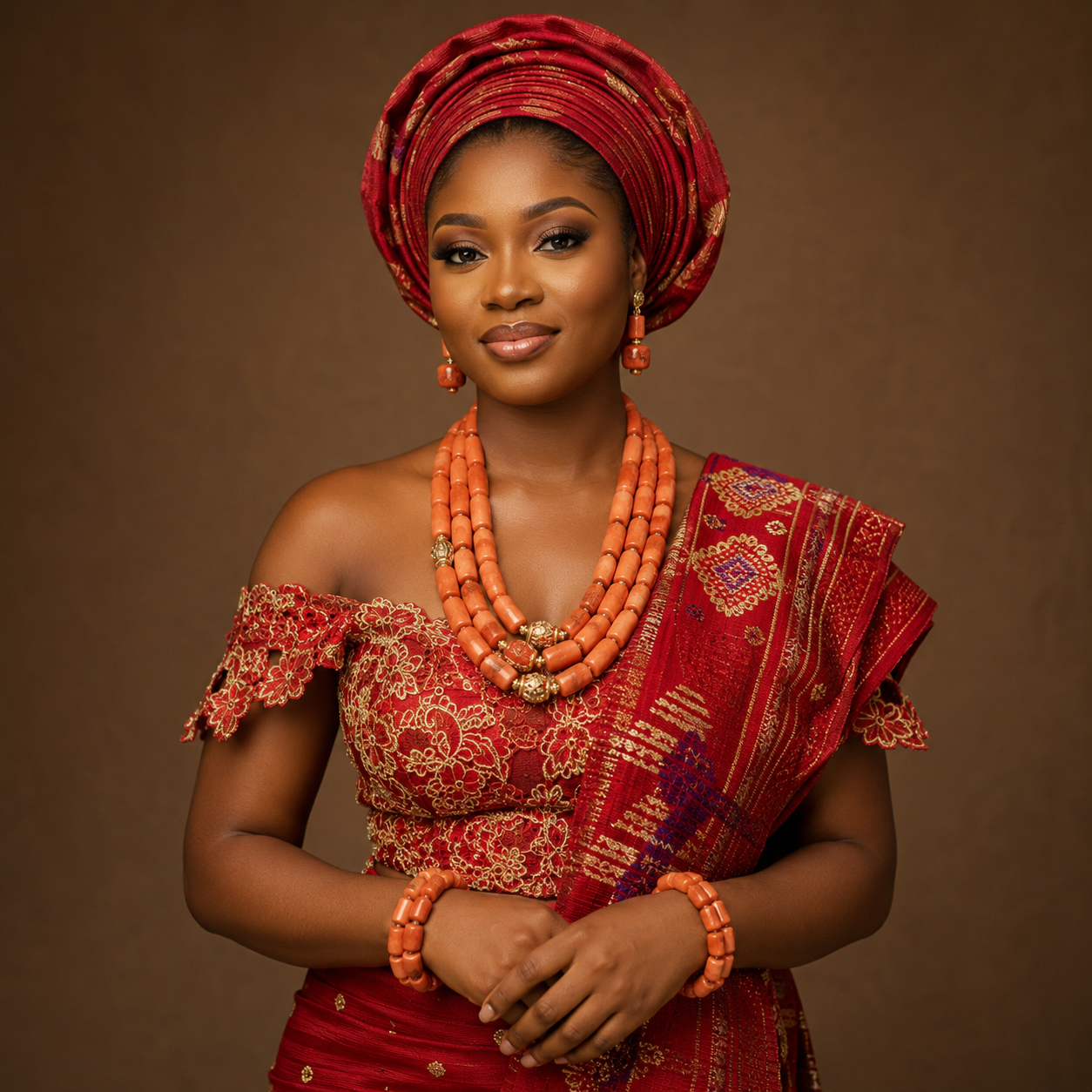
Igbo traditional dress often includes wrappers, blouses, head ties, coral beads, caps, walking sticks, embroidered shirts and ceremonial outfits. Women may wear colourful wrappers, lace, george fabric, beads and head ties, while men may wear isiagu shirts, wrappers, caps and beads for weddings, title events and cultural ceremonies.
Igbo marriage negotiations commonly involve bridewealth and family gifts. Common stages may include family inquiry, introduction, wine carrying, agreement on bridewealth, gifts for parents and relatives, food or drinks for the gathering, blessings and customary recognition. Lists vary strongly by town and family, so one family’s list should not be presented as universal.
Igbo performance traditions include masquerade dances, ekwe and ogene rhythms, flute, drums, call-and-response singing, women’s dance groups and festival performances.
Common Igbo foods include yam, pounded yam, cassava, garri, fufu, rice, ofe nsala, ofe onugbu, egusi soup, okra soup, palm nut dishes, stockfish, goat meat, chicken, plantain and kola nut in ceremonial contexts.
Igbo crafts include wood carving, masks, pottery, weaving, blacksmithing, bronze work, beadwork, textiles and decorative household items.
Igbo origins are preserved through town histories, lineage stories, oral tradition and archaeology. Nri, Arochukwu, Onitsha and other centres carry important historical memories, but Igbo identity should not be reduced to one single origin story for every community.
Igbo history includes farming, trade, village republican systems, title societies, markets, ritual authority, colonial change, Christianity, migration, the Nigerian civil war period and modern global diaspora life.
Modern Igbo dating varies by family, religion and location. Serious relationships often move toward family awareness, investigation of family background, formal introduction and marriage discussions.
Igbo marriage is family-centred and often includes inquiry, introduction, bridewealth negotiation, wine carrying, family blessings and customary, church or civil ceremonies. Details differ by town and family.
Traditional Igbo belief recognises Chukwu as Supreme God, ancestors, personal chi, moral order and community ritual life. Today many Igbo people are Christian while some families preserve selected cultural customs.
Leadership can include elders, titled men and women, age grades, village councils, chiefs, traditional rulers and family heads, depending on the community.
Sensitive areas include mocking dialects, exposing private marriage lists, disrespecting elders, misrepresenting sacred masquerades and treating all Igbo towns as culturally identical.