Kenya / Diaspora communities / Tanzania / Uganda
The Kalenjin are a major Nilotic people of Kenya and neighbouring East African areas, known for Kalenjin language varieties, clan and age-set traditions, cattle and farming heritage, bridewealth customs, music, dance, athletic prominence, family values and respect for elders.
Chamgei / regional usage
Hello · Kalenjin varieties
Kongoi / regional usage
Thank you · Kalenjin varieties
The Kalenjin are a major Nilotic people mainly associated with Kenya’s Rift Valley, with related communities in Uganda and Tanzania. Kalenjin identity is connected to language varieties, clan history, age-set traditions, cattle, farming, marriage customs, music, dance, elders and community responsibility.
Kalenjin includes several related communities, so public content should describe broad patterns while recognising Nandi, Kipsigis, Tugen, Pokot, Keiyo, Marakwet, Sabaot and other identities.
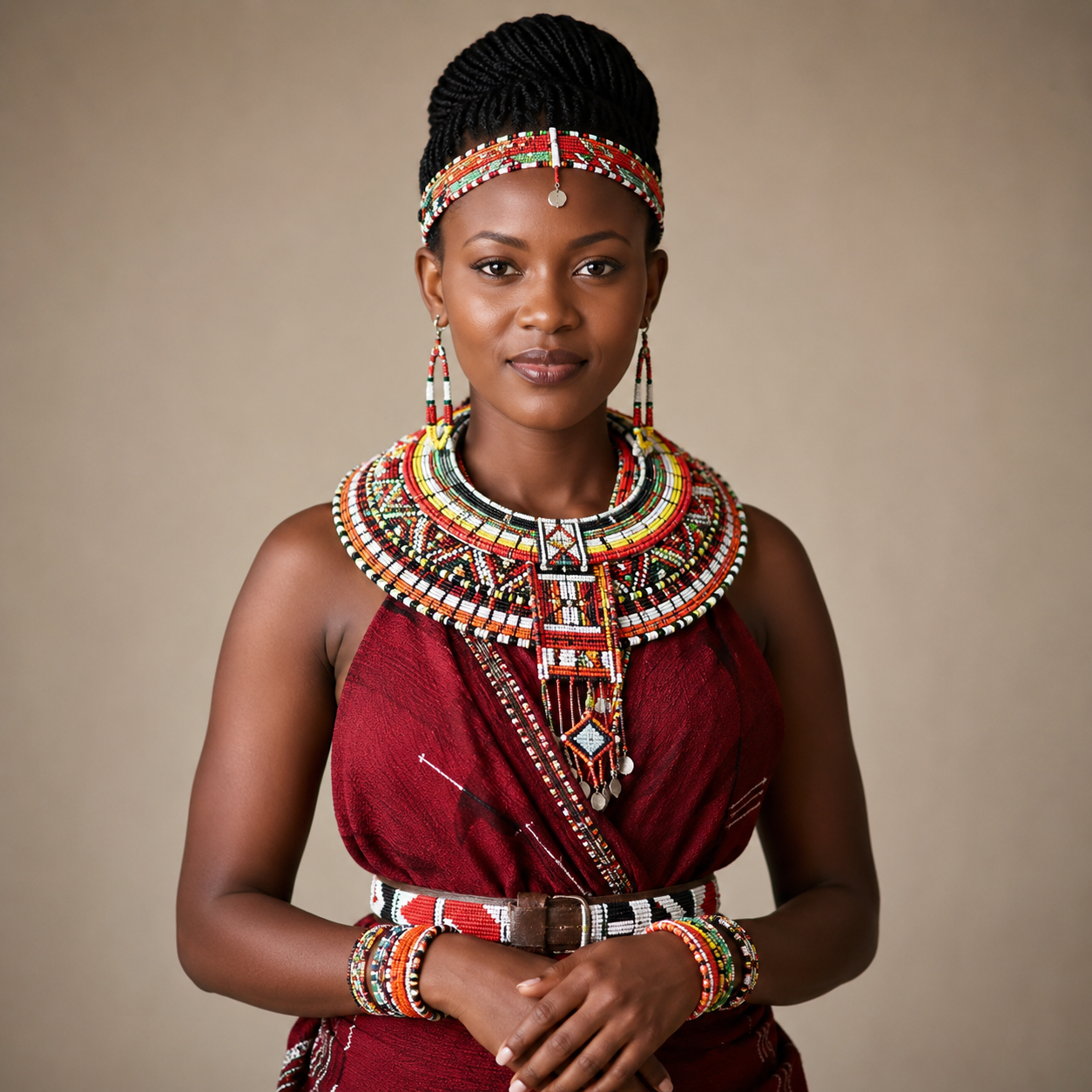
Kalenjin ceremonial dress may include wrapped cloth, beadwork, headwear, hides or animal-skin inspired accessories, formal clothing and modern African-print outfits for weddings, initiation-related ceremonies, cultural events and family gatherings.
Kalenjin marriage customs commonly include family introduction, bridewealth discussions, gifts, food, blessings and community recognition. Bridewealth may historically involve cattle or livestock equivalents, but modern details vary by family, religion and community.
Kalenjin performance traditions include singing, jumping or energetic group dances in some communities, wedding songs, praise songs, initiation-related performances where practised, drumming and community celebration dances.
Common Kalenjin foods include milk, mursik fermented milk, ugali, millet, sorghum, maize, beans, vegetables, beef, goat meat, chicken, potatoes and tea.
Kalenjin crafts include beadwork, gourds for mursik, leatherwork, baskets, mats, woodwork, household items, ceremonial ornaments and farming tools.
Kalenjin origins are preserved through Nilotic migration histories, clan narratives and settlement memories in the Rift Valley and surrounding regions. Different Kalenjin subgroups preserve distinct histories and identities.
Kalenjin history includes Nilotic settlement, cattle keeping, farming, age-set organisation, interaction with neighbouring peoples, colonial change, Christianity, education, land politics, athletics, urbanisation and modern Kenyan national life.
Modern Kalenjin dating varies by family, religion and subgroup. Serious relationships often move toward family awareness, formal introduction and marriage discussions.
Kalenjin marriage is family-centred and commonly includes introductions, bridewealth discussions, gifts, blessings, meals and customary, church or civil ceremonies depending on the family.
Traditional Kalenjin belief includes a Supreme Being, ancestors, moral order, cattle symbolism and elder authority. Many Kalenjin people today are Christian while preserving selected cultural customs.
Leadership may include elders, clan heads, family heads, age-set leaders, religious leaders, chiefs and community organisers.
Sensitive areas include disrespecting elders, exposing private bridewealth matters, stereotyping Kalenjin identity only through athletics and treating all Kalenjin subgroups as identical.