South Sudan / Diaspora communities / Ethiopia / Sudan
The Nuer are a major Nilotic people of South Sudan and Ethiopia, known for Nuer language, cattle culture, clan identity, bridewealth customs, pastoral life, songs, oral history, age-set traditions in some communities, strong family values and respect for elders.
Male / regional usage
Hello · Nuer
Ciɛŋ / regional usage
Thank you · Nuer
The Nuer are a major Nilotic people mainly associated with South Sudan and western Ethiopia. Nuer identity is connected to language, cattle, clan lineage, family, elders, marriage customs, pastoral life, fishing and farming in some areas, songs, oral history, spirituality and community responsibility.
Nuer communities are diverse by section, clan, country and diaspora setting. Public content should describe broad cultural patterns while recognising local variation.
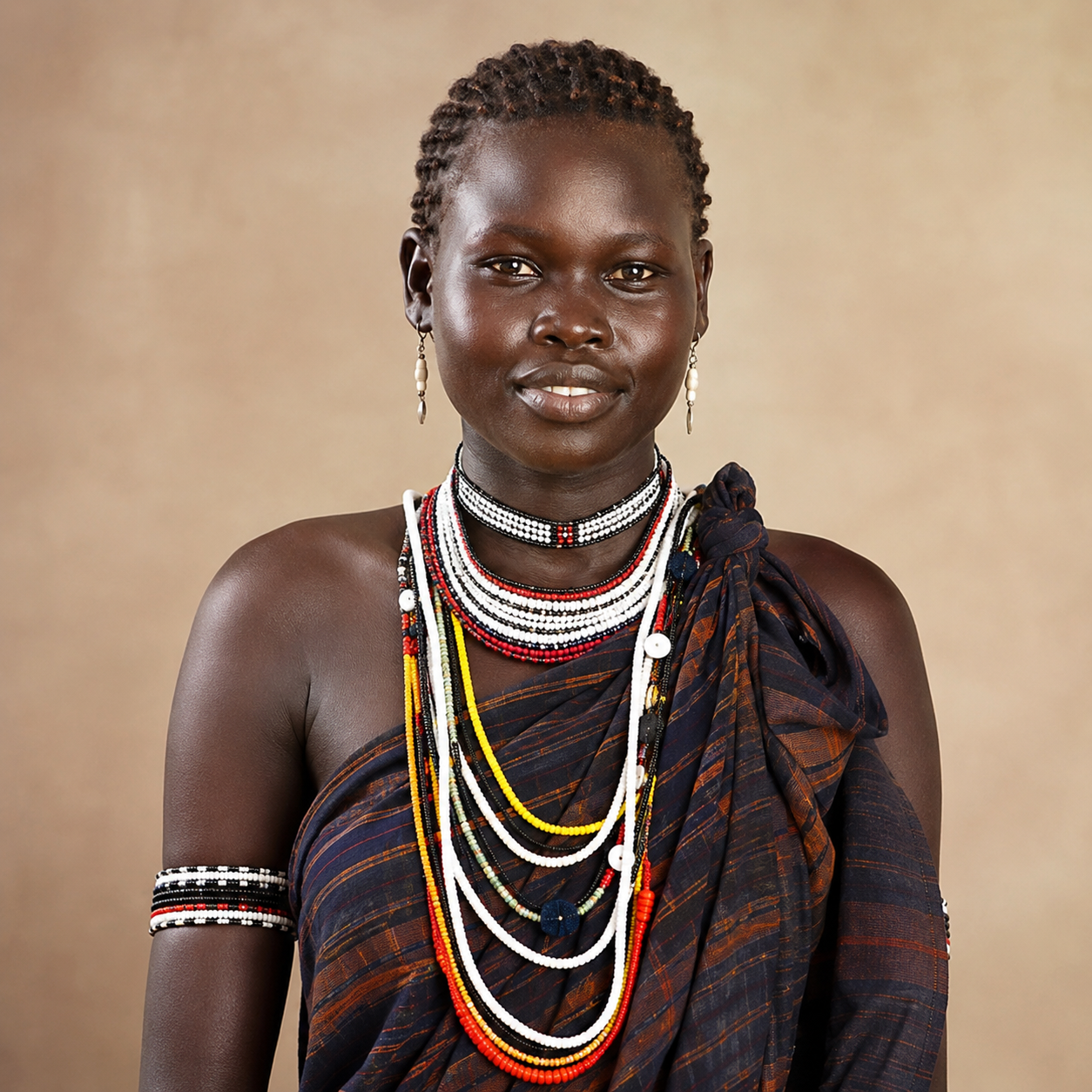
Nuer dress varies by region, generation and ceremony. Traditional presentation may include wrapped cloth, beadwork, cattle-related adornment, body decoration, headwear and practical clothing suited to pastoral and riverine life. Modern Nuer people also wear contemporary clothing, especially in towns and diaspora communities.
Nuer marriage negotiations commonly involve family and clan discussions, bridewealth traditionally associated with cattle, gifts, food, blessings and community recognition. Details vary by family, clan and modern agreement. Bridewealth should be described as family union and responsibility, not as a purchase.
Nuer performance traditions include cattle songs, praise singing, group dancing, wedding songs, ululation, drumming in some contexts and community celebration performances.
Common Nuer foods include milk, sour milk, meat, fish, sorghum, millet, maize, vegetables, stews and foods shaped by pastoral, riverine and farming life.
Nuer crafts include beadwork, cattle ornaments, leatherwork, gourds, baskets, mats, spears, staffs, household items and practical pastoral tools.
Nuer origins are preserved through Nilotic oral traditions, clan histories and settlement memories across the Nile and borderland regions. Different Nuer sections preserve their own lineage, migration and cattle-camp histories.
Nuer history includes Nilotic settlement, cattle pastoralism, clan organisation, riverine life, colonial boundaries, Sudanese civil wars, displacement, South Sudanese independence, Ethiopian borderland life and modern diaspora communities.
Modern Nuer dating varies by family, religion, country and diaspora setting. Serious relationships often move toward family knowledge, clan awareness and elder-guided marriage discussions.
Nuer marriage is family-centred and commonly includes introductions, clan awareness, bridewealth negotiations, cattle symbolism, blessings, meals and community recognition. Details vary by family and section.
Traditional Nuer belief includes a Supreme Being, spirits, ancestors, cattle symbolism, blessings and moral order. Many Nuer people today are Christian while preserving selected cultural customs.
Leadership includes elders, chiefs, clan heads, cattle camp leaders, family heads, religious leaders and community organisers.
Sensitive areas include disrespecting elders, treating cattle bridewealth as a purchase, misrepresenting initiation or scarification practices, ignoring civil-war trauma and treating all Nuer sections as identical.