Somalia / Diaspora communities / Djibouti / Ethiopia / Kenya / Yemen
The Somali are a Cushitic-speaking people of the Horn of Africa, known for Somali language, clan lineages, Islamic faith, pastoral and coastal heritage, poetry, camel culture, family honour, marriage customs, food traditions, music and a large global diaspora.
Salaam alaykum
Hello · Somali / Islamic usage
Iska warran?
How are you? · Somali
Mahadsanid
Thank you · Somali
Nabad gelyo
Goodbye · Somali
The Somali are a major Cushitic-speaking people of the Horn of Africa, mainly associated with Somalia, Somaliland, Ethiopia, Kenya and Djibouti. Somali identity is connected to language, clan lineage, Islam, family honour, pastoral and coastal life, poetry, trade, camels, marriage customs and community responsibility.
Somali communities are diverse by clan, region, country, rural or urban background and diaspora experience. Public content should describe broad cultural patterns while recognising variation.
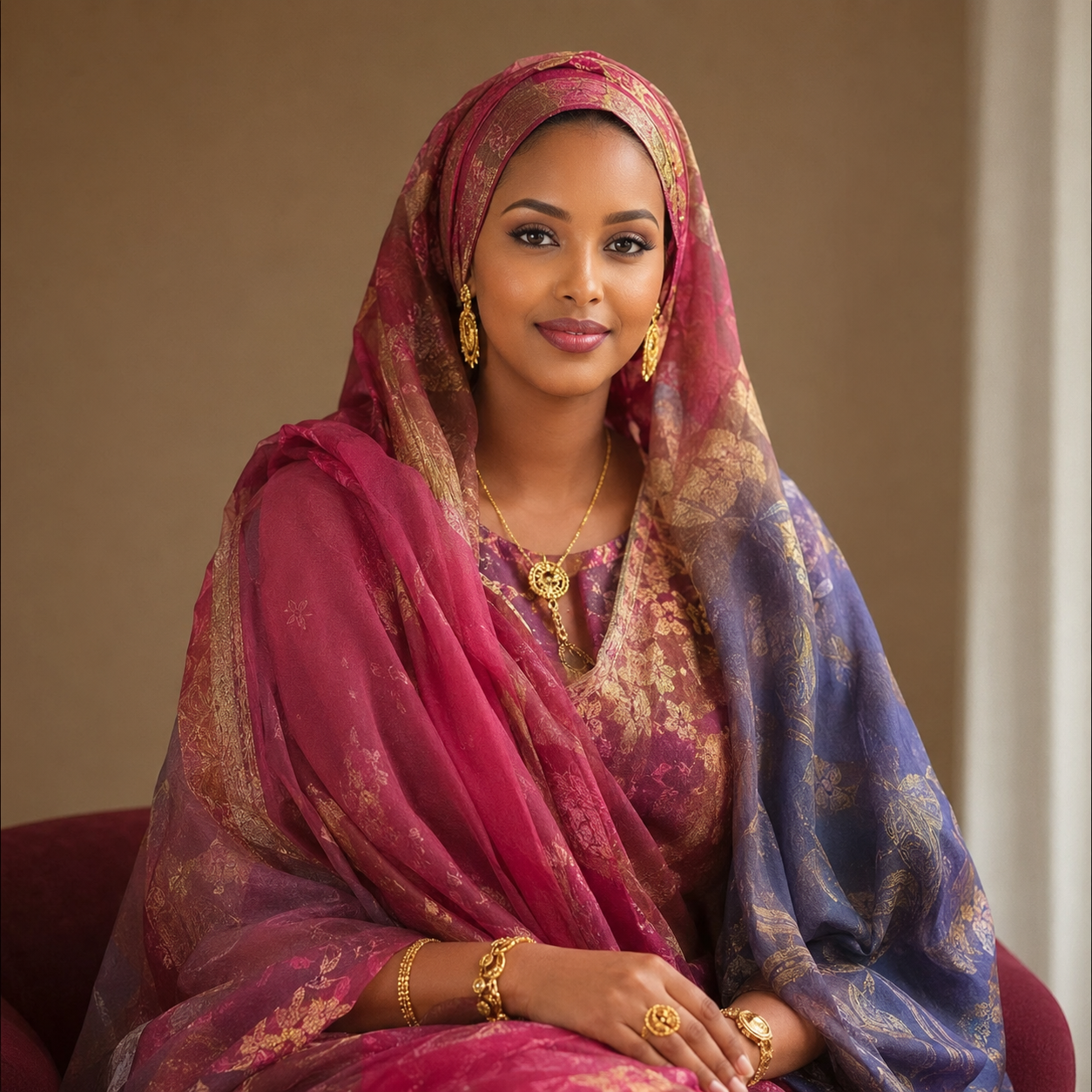
Somali traditional dress often includes modest clothing shaped by Islamic practice and regional style. Women may wear dirac, guntiino, hijab, garbasaar, jewellery and henna for ceremonies, while men may wear macawiis, shirts, shawls, caps, turbans or formal robes.
Dress is important for weddings, Eid, family celebrations, cultural events and religious occasions.
Somali marriage customs commonly involve family negotiation, Islamic nikah, mahr or bride gift, family blessings, clothing, jewellery, food and wedding celebrations. Details vary by clan, country, family and religious practice.
Mahr is an Islamic marital obligation and should not be described as buying a bride.
Somali performance traditions include poetry, dhaanto dance, wedding songs, clapping, drumming in some contexts, buraanbur women’s poetry and modern Somali music. Poetry is especially important in Somali cultural expression.
Common Somali foods include canjeero/lahooh, rice, pasta, goat meat, camel meat, beef, fish in coastal areas, suqaar, sambuus, xalwo, tea, camel milk and spiced stews.
Somali crafts include weaving, mats, baskets, leatherwork, camel gear, jewellery, henna art, wooden items, incense burners and household objects linked to pastoral and coastal life.
Somali origins are preserved through clan genealogies, oral histories, poetry, Islamic traditions and regional memories across the Horn of Africa. Clan lineage is central to identity, but different families preserve distinct histories.
Because Somali communities are spread across borders and diaspora locations, no single origin story should be applied to every household.
Somali history includes pastoral mobility, coastal trade, Islamic scholarship, clan organisation, sultanates, poetry, colonial borders, modern state formation, conflict, migration and global diaspora life.
Today Somali identity continues through language, Islam, poetry, family networks, food, dress, business, media and transnational community ties.
Modern Somali dating varies by family, religion and diaspora setting. Serious relationships commonly involve modest conduct, family knowledge, Islamic expectations and formal marriage discussions.
Somali marriage is family-centred and commonly includes family negotiations, mahr agreement, nikah, blessings, food, clothing, jewellery and wedding celebrations. Details vary by family and region.
Most Somali people are Muslim, and Islam strongly shapes marriage, naming, dress, family life, ethics and community conduct. Clan lineages and poetry also carry cultural importance.
Leadership may include elders, clan leaders, religious scholars, family heads, community organisers and respected business or civic leaders.
Sensitive areas include disrespecting Islam, clan identity, elders or family honour, stereotyping Somalis only through conflict, exposing private marriage matters and treating all Somali clans as identical.