Rwanda / Burundi / Democratic Republic of the Congo / Diaspora communities / Tanzania / Uganda
The Tutsi are a Great Lakes people mainly associated with Rwanda and Burundi, known for Kinyarwanda and Kirundi language contexts, cattle heritage, family values, marriage customs, elegant ceremonial dress, dance, oral history and a complex modern history shaped by colonialism, identity politics and reconciliation.
Muraho
Hello · Kinyarwanda
Murakoze
Thank you · Kinyarwanda
Amahoro / Bite
Hello · Kirundi
Urakoze
Thank you · Kirundi
The Tutsi are a people of the African Great Lakes region, especially associated with Rwanda and Burundi, with communities also found in eastern Democratic Republic of Congo, Uganda, Tanzania and the diaspora. Tutsi identity is connected to language, family lineage, cattle heritage, marriage customs, music, dance, oral history, Christianity, older spiritual traditions in some contexts, elders and community responsibility.
Because Tutsi identity is connected to sensitive modern histories in Rwanda and Burundi, public content should be careful, respectful and avoid political simplification or ethnic stereotyping.
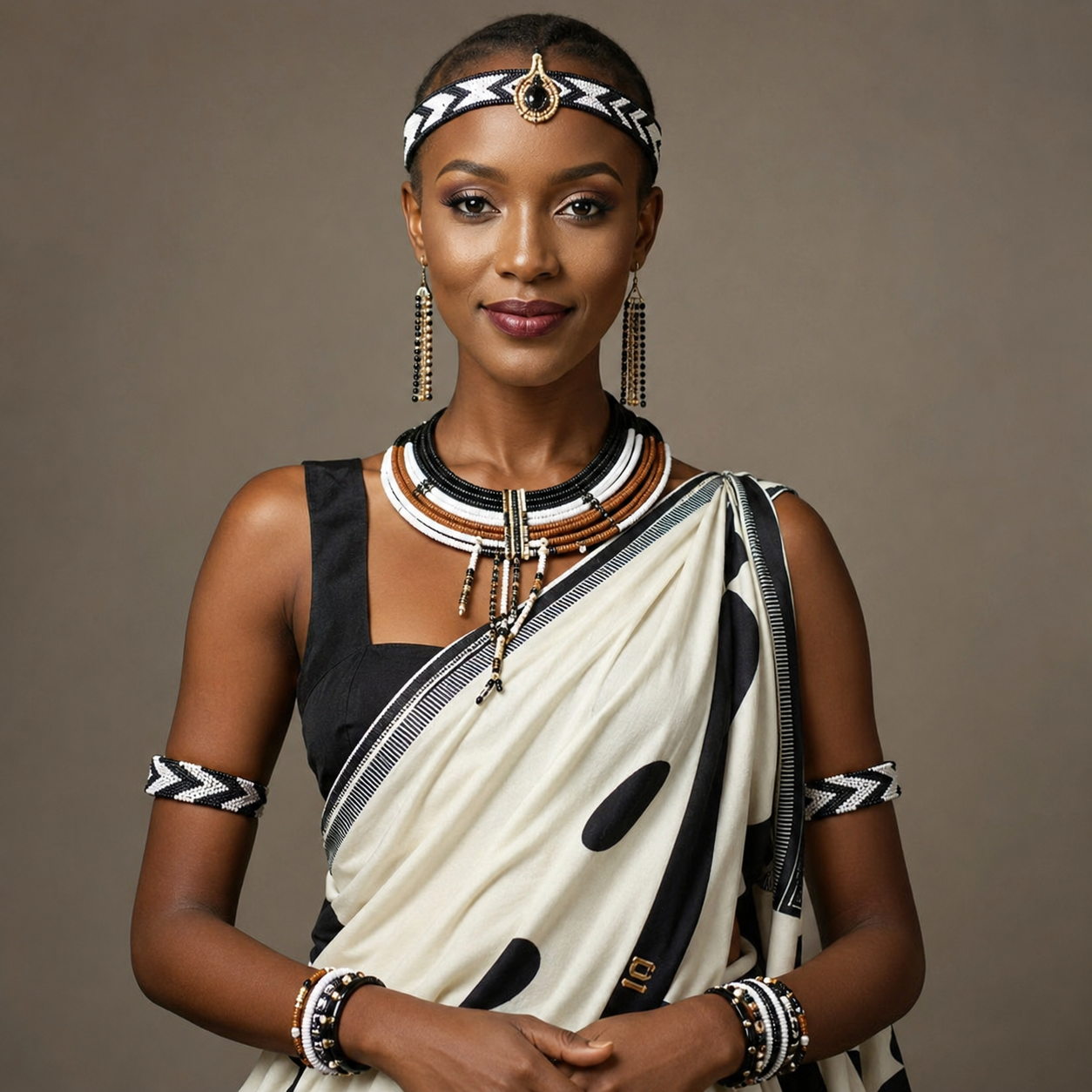
Tutsi clothing varies widely by country, region, religion and generation. Traditional and ceremonial dress may include elegant wrapped garments, imikenyero-style dress in Rwandan contexts, beads, headwear, formal clothing and coordinated family outfits for weddings, church events and cultural ceremonies.
Tutsi marriage customs vary by family, church and country. Common elements may include family introduction, bridewealth or agreed gifts in some communities, drinks, food, clothing, blessings and customary, church or civil marriage recognition. Details should be confirmed by families involved.
Tutsi and wider Rwandan/Burundian performance traditions include graceful dance, drumming, singing, intore-related dance in Rwandan national-cultural contexts, wedding songs and community celebration performances.
Common foods include milk, beans, bananas, plantains, sorghum, maize, cassava, potatoes, sweet potatoes, vegetables, goat meat, beef, chicken and local stews.
Crafts include basketry, pottery, weaving, mats, drums, beadwork, household utensils, woodwork and ceremonial items.
Tutsi origins are preserved through Great Lakes oral traditions, family histories and regional memories across Rwanda, Burundi and neighbouring areas. Identity developed over time through language, cattle associations, lineage systems and changing political histories.
Tutsi history includes Great Lakes kingdoms, cattle-linked social status in some historical contexts, colonial racialisation of identities, independence-era politics, conflict, genocide in Rwanda, displacement, reconciliation efforts and modern national and diaspora life.
Modern Tutsi dating varies by country, religion, family and generation. Serious relationships often move toward family awareness, church or civil expectations and marriage discussions.
Marriage is family-centred and may include introductions, agreed gifts or bridewealth in some families, family blessings, church or civil ceremony and community celebration. Practices differ by country and family.
Many Tutsi people are Christian, especially Catholic or Protestant, while older Great Lakes spiritual ideas, ancestors, cattle symbolism and family customs may remain culturally important in some families.
Leadership may include family elders, local authorities, church leaders, community organisers and respected civic figures. Traditional royal and chiefly histories vary by region and period.
Sensitive areas include genocide, ethnic stereotyping, political blame, colonial identity categories, trauma, displacement and treating Hutu, Tutsi and Twa identities as simple or fixed categories. Content should be respectful and historically careful.