South Africa
The Zulu are a major Nguni people of Southern Africa, known for isiZulu language, KwaZulu-Natal heritage, family-centred values, lobola customs, beadwork, dance, praise poetry, cattle traditions, ancestral respect, royal history and the legacy of leaders such as Shaka kaSenzangakhona.

Sawubona
Hello · isiZulu
Sanibonani
Hello to more than one person · isiZulu
Unjani?
How are you? · isiZulu
Ngikhona / Ngiyaphila
I am fine · isiZulu
Ngiyabonga
Thank you · isiZulu
Ngiyacela
Please · isiZulu
Sawubona ekuseni
Good morning · isiZulu
Sala kahle
Goodbye / stay well · isiZulu
Hamba kahle
Goodbye / go well · isiZulu
The Zulu are a major Nguni people of Southern Africa, mainly associated with KwaZulu-Natal in South Africa. Their main language is isiZulu, one of South Africa’s most widely spoken languages, although many Zulu people also speak English, isiXhosa, siSwati, isiNdebele or other regional languages depending on where they live.
Zulu identity is connected to family, clan names, praise names, respect for elders, cattle, marriage negotiations, beadwork, dance, praise poetry, ancestral respect, royal history and community responsibility. Zulu history is strongly associated with the rise of the Zulu kingdom under Shaka kaSenzangakhona and later struggles involving colonialism, land, monarchy and modern South African politics.
Zulu culture is not identical in every family or region. Customs may differ by clan, church, rural or urban setting, royal affiliation, education and generation, so public content should describe broad cultural patterns while recognising variation.
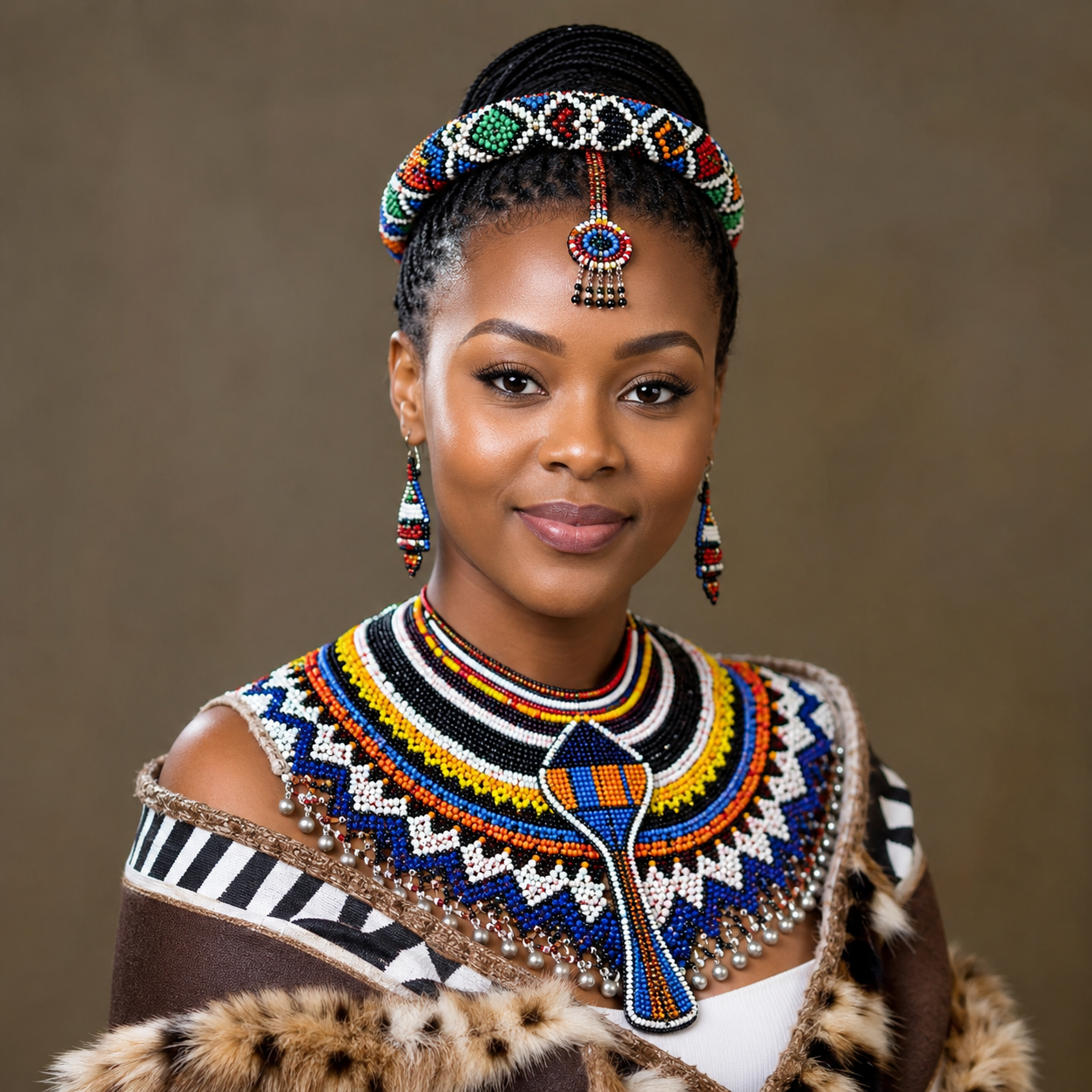
Zulu traditional dress is widely recognised for beadwork, animal-skin inspired garments, shields, headbands, skirts, aprons, blankets and ceremonial accessories. Women may wear beaded necklaces, belts, headwear, skirts or aprons that can reflect age, marital status, ceremony and family identity.
Men may wear traditional attire such as ibheshu-inspired garments, headbands, shields, sticks, beadwork and animal-skin inspired accessories during ceremonies, dance performances and heritage events. In modern life, Zulu people wear contemporary clothing daily, while traditional dress remains important for weddings, lobola negotiations, reed dance participation, cultural festivals, funerals, royal events and family ceremonies.
Dress is used to show dignity, respect, beauty, status, family pride and connection to heritage.
Zulu customary marriage negotiations commonly involve lobola, traditionally linked to cattle but often represented partly or fully in money today. The process is family-centred and usually involves elders or representatives from both families.
Common items or stages may include:
Lobola should not be described as buying a bride. Its cultural meaning is respect, gratitude, commitment, social recognition and the joining of families.
Zulu dance traditions include powerful footwork, singing, drumming, chanting, praise poetry and group performance. Well-known cultural dance references include indlamu, often associated with strength and warrior-style performance, as well as dances performed at weddings, heritage events, royal gatherings and community celebrations.
Dance can express bravery, celebration, courtship, history, respect, family pride, social unity and ceremonial transition. Zulu music and performance have also influenced gospel, maskandi, isicathamiya, choral music and contemporary South African popular culture.
Common Zulu foods include pap or phuthu, maize meal porridge, beans, pumpkin, leafy greens, amadumbe, beef, goat, chicken, tripe, amasi sour milk, steamed bread, sorghum dishes and traditional beer in ceremonial contexts.
Food is closely connected to hospitality, cattle culture, weddings, funerals, family visits and community ceremonies. Serving guests properly at lobola meetings, weddings and funerals is an important sign of respect and care.
Zulu craft traditions include beadwork, basketry, pottery, shields, mats, wood carving, leatherwork, ceremonial garments and household items. Beadwork is especially important and may communicate beauty, identity, age, affection, status, ceremony and family pride.
Crafts are used in daily life, weddings, courtship, dance, royal events, tourism, gifting and cultural representation. Zulu baskets, beadwork and carved objects are among the most recognisable art forms in Southern Africa.
Zulu origins are linked to Nguni-speaking communities in south-eastern Africa. The name Zulu is associated with Zulu kaMalandela, remembered as an early ancestor of the Zulu clan. Over time, smaller clans and communities became part of a larger Zulu identity.
The rise of the Zulu kingdom under Shaka kaSenzangakhona in the early nineteenth century transformed Zulu political and military organisation and shaped a strong national identity. Different families preserve their own histories through clan names, praise names, royal memory, elders and home areas.
It is best to present Zulu identity as a broad Nguni cultural and historical identity rather than one single family story for every household.
Zulu history is strongly connected to the rise of the Zulu kingdom in what is now KwaZulu-Natal. Under Shaka and later kings, the Zulu kingdom became a powerful political and military force in Southern Africa, with age regiments, cattle, royal authority, diplomacy and conflict shaping public life.
The nineteenth century brought major conflict with neighbouring groups, Voortrekker republics and British colonial power. The Anglo-Zulu War and later colonial rule deeply affected Zulu sovereignty, land, leadership and society.
In the twentieth century, apartheid, labour migration, urbanisation, Christianity, homeland politics and modern South African democracy all shaped Zulu life. Today Zulu identity continues through isiZulu language, family customs, lobola, music, dance, beadwork, churches, royal memory, cultural festivals and urban communities.
Modern Zulu dating varies by family, religion, clan, age, education, location and personal values. In many families, a serious relationship is expected to move toward respectful family knowledge and formal introduction rather than remaining private indefinitely.
Common expectations may include respect, honesty, maturity, faithfulness, financial responsibility, good communication, respect for elders and avoiding behaviour that embarrasses either family. Families may expect formal steps before cohabitation, pregnancy, marriage planning or public recognition of the relationship.
Urban couples may date more independently, but family approval often remains important when the relationship becomes serious. Church expectations may also shape dating and marriage decisions in many families.
Zulu marriage customs are family-centred. A serious marriage is not viewed only as a private agreement between two individuals; it creates a relationship between families and extended households.
Typical steps may include private commitment by the couple, family awareness, formal introductions, sending representatives, lobola negotiations, agreement on cattle or money equivalents, gift-giving ceremonies such as umembeso in some families, family blessings and then a customary, church or civil ceremony depending on the couple and families.
Practices can differ between clans, churches, regions and individual households. Public content should therefore avoid presenting one family’s lobola list or ceremony as compulsory for all Zulu people.
Traditional Zulu belief gives importance to uNkulunkulu as the Supreme Being, ancestors, family lineage, moral conduct, elders, cattle, protection and community harmony. Ancestors may be understood as guardians of family memory, moral order and belonging.
Today many Zulu people are Christian, while some families maintain selected traditional customs or combine Christian practice with cultural ceremonies. Traditional healing and ancestral respect may still be important in some families, while others follow mainly church-based approaches.
Respect for elders, funeral obligations, family unity, remembrance of the dead, thanksgiving, blessings and proper conduct during marriage and family ceremonies remain culturally significant in many Zulu communities.
Traditional Zulu leadership includes the royal house, kingship, chiefs, headmen, elders and senior family representatives. Royal history remains important in Zulu cultural memory, especially through the legacy of the Zulu kingdom and leaders such as Shaka, Dingane, Mpande, Cetshwayo and later monarchs.
At household level, senior relatives often guide marriage discussions, funeral arrangements, inheritance matters, family rituals and decisions involving the extended family. Leadership is therefore both community-based and family-based, with modern civic, church and state structures also influencing community life today.
Sensitive areas include disrespecting elders, mocking clan names or praise names, treating lobola as a commercial purchase, exposing private family negotiations publicly, dismissing isiZulu language or identity, and reducing Zulu culture only to warriors, shields or dance.
Royal history, land, political identity, initiation-related customs, ancestral practices, gender roles and family rituals can be sensitive. Public content should use respectful wording, recognise regional variation and avoid stereotypes that romanticise or oversimplify Zulu culture.